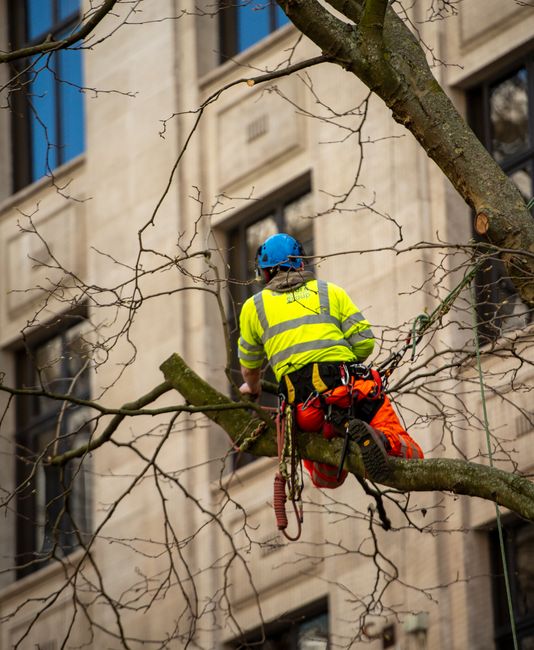
Tree work permits gardeners responsibilities Croydon Sanderstead: what gardeners need to know in plain English
If you are arranging tree work on a garden in Sanderstead or wider Croydon, the paperwork can feel more tangled than the branches themselves. One minute you are thinking about pruning, crown reduction, or removing a leaning tree; the next you are wondering who checks for permits, who speaks to the council, and whether the gardener or homeowner is actually responsible. That is exactly where Tree work permits gardeners responsibilities Croydon Sanderstead becomes a practical issue, not just a search phrase.
This guide explains what tree work permits are, when they matter, where a gardener's responsibilities usually begin and end, and how to avoid the awkward, expensive mistakes that can follow a rushed decision. It is written for everyday homeowners, landlords, and anyone coordinating outside work who wants the job done properly, safely, and without drama. To be fair, that last part is usually what people want most.
Where tree work sits alongside wider garden maintenance or a larger tidy-up, it can help to understand the bigger picture too. Services such as the full services overview, routine garden maintenance, garden clearance, and tree lopping and removal often overlap in real projects, even when people think they are separate.
Table of Contents
- Why Tree work permits gardeners responsibilities Croydon Sanderstead Matters
- How Tree work permits gardeners responsibilities Croydon Sanderstead Works
- Key Benefits and Practical Advantages
- Who This Is For and When It Makes Sense
- Step-by-Step Guidance
- Expert Tips for Better Results
- Common Mistakes to Avoid
- Tools, Resources and Recommendations
- Law, Compliance, Standards, or Best Practice
- Options, Methods, or Comparison Table
- Case Study or Real-World Example
- Practical Checklist
- Conclusion
- Frequently Asked Questions
Why Tree work permits gardeners responsibilities Croydon Sanderstead Matters
Tree work is not just another garden task. In many parts of Croydon, especially on leafy residential streets in and around Sanderstead, tree work may be affected by protection rules, conservation considerations, planning controls, access constraints, and safety duties. That matters because a simple prune can quickly become a compliance issue if the wrong person assumes the job is straightforward.
Homeowners often expect a gardener to "just handle it". Gardeners, meanwhile, may be thinking about whether the work is suitable for them, whether the tree could be protected, and whether they should stop and ask for permission before anything is cut. Both sides can be right, and both sides can also be a bit too relaxed if nobody spells out the responsibility split early on.
The key point is this: tree work is a shared decision, but not a shared legal shrug. Someone needs to check whether consent is required, someone needs to define the scope, and someone needs to make sure the work is safe and defensible. In practical terms, that often means the gardener advises, the owner authorises, and a suitably competent person carries out or oversees the work.
Practical summary: if a tree might be protected, if the work changes the tree's structure, or if access and safety are tricky, pause before starting. A short check at the beginning can save a long headache later.
It also matters because poor handling can damage more than a single tree. Bad cuts, over-pruning, root disturbance, dropped branches, or accidental damage to fences and paving can create disputes very quickly. And once trust is lost, even a neat garden can feel like a messy job.
How Tree work permits gardeners responsibilities Croydon Sanderstead Works
In everyday terms, the process usually follows a simple pattern, even if the terminology sounds more formal than it really is. First, someone identifies the tree work needed. Second, the site is checked for constraints. Third, permission or confirmation is obtained if required. Then the work is planned, carried out, and tidied up responsibly.
For many domestic gardens, the question is not whether a "permit" exists in a generic sense, but whether the tree is subject to planning controls or whether the work needs formal consent. The word permit is often used loosely by customers, but the actual requirement may be a tree-related consent, a notice period, or simply careful self-checking against local rules. That distinction matters. A lot.
Gardeners working in Sanderstead should treat tree work as a decision tree in the literal sense. Is the tree large, old, visible from the street, or in a conservation-sensitive spot? Is the work routine pruning or something more invasive? Could roots, nesting birds, overhead lines, or neighbours be affected? These questions determine whether the job can move ahead straight away or needs more caution first.
A sensible workflow usually looks like this:
- Inspect the tree and the area around it.
- Identify the type of work requested.
- Check whether the tree may be protected or restricted.
- Confirm who is responsible for seeking permission or approval.
- Agree the scope, timing, access, and waste removal.
- Carry out the work safely and document what was done.
For larger jobs or trees with more risk, it can be wise to use a specialist rather than assume every garden contractor is automatically equipped for complex tree work. Some jobs are fine as part of broader landscape gardening or general upkeep, while others really belong in a dedicated tree service conversation.
Key Benefits and Practical Advantages
Getting the responsibility split right is not paperwork for the sake of paperwork. It has real, everyday benefits that people notice quickly once a job goes smoothly.
- Less risk of non-compliance: nobody wants to discover after the fact that the wrong branch was removed without checking the tree status.
- Fewer disputes: clear responsibility means fewer "I thought you were handling that" moments.
- Better tree health: proper planning leads to more thoughtful pruning and less unnecessary damage.
- Safer work: a tidy risk assessment and access plan reduces the chance of injury or property damage.
- Cleaner handover: when everyone knows the scope, the site usually ends up looking better, not just "cut back".
There is also a commercial side to it. A well-run tree job often protects property value and kerb appeal. A badly handled one, on the other hand, can leave a patchy crown, a stressed tree, or a lingering argument with a neighbour. Nobody enjoys that sort of thing on a quiet Saturday morning, especially when the sawdust is still on the patio.
Another advantage is confidence. If the gardener explains what they can do, what needs checking, and what should be left to a specialist, the customer can make a calm decision. That calmness is worth a lot in itself.
Who This Is For and When It Makes Sense
This topic matters to more people than you might think. It is relevant if you are:
- a homeowner in Sanderstead or Croydon planning tree pruning or removal;
- a landlord arranging seasonal garden work before a tenancy change;
- a gardener or maintenance contractor taking on mixed outdoor jobs;
- a property manager responsible for keeping outside areas safe and tidy;
- someone considering whether a tree needs trimming, shaping, or full removal.
It makes sense to pause and check responsibilities when the work is not routine. For example, light formative pruning on a small ornamental tree is one thing. Removing a substantial branch over a driveway is another. The first may be a straightforward garden task. The second may need a more careful assessment, especially if it affects safety, access, or a protected tree.
It is also sensible to slow down if the tree is close to a boundary, shared fence, listed property, or visible road frontage. These are the situations where assumptions cause trouble. And in a tight suburban setting, trouble tends to be quite visible.
If you are already arranging wider outdoor improvements, it can be helpful to think about the whole site. For instance, a tree job may be coordinated with hedge trimming, lawn mowing, or even a more involved landscaping plan so that the garden is not disrupted twice.
Step-by-Step Guidance
If you want a practical way to approach tree work without overthinking it, this is the sequence we would suggest.
1. Identify the exact work needed
Be specific. "Cut the tree back" is vague. Say whether you need thinning, crown lifting, deadwood removal, height reduction, or full removal. The more precise the request, the easier it is to judge what rules and skills apply.
2. Check the tree's likely status
Ask whether the tree may be protected or in a restricted area. You do not need to be a planning expert, but you do need to stop assuming that all trees are free to alter. If something feels uncertain, that is usually your cue to check before cutting.
3. Decide who handles permission
In many domestic arrangements, the owner or person instructing the work will need to give consent and may need to contact the relevant local authority if formal approval is required. A gardener can help by flagging the issue, but should not be left guessing. Straight communication here is everything.
4. Clarify the scope in writing
Even a short written note is useful. It should cover what is being done, which trees are involved, what waste is being removed, and what is not included. This is the point where misunderstandings are quietly prevented.
5. Check safety and access
Look at nearby fences, sheds, glazing, parked cars, neighbour access, pets, children, and overhead hazards. A job can be perfectly legal and still be badly planned if the area around the tree is ignored.
6. Carry out the work carefully
Good tree work is measured and controlled. That usually means sensible cutting points, clean tools, and a steady approach rather than rushing through the tree with a "that'll do" attitude. Truth be told, trees remember bad decisions longer than we do.
7. Tidy, dispose, and review
Once the work is done, clear the site, remove waste responsibly, and review whether the result matches the original aim. If the tree was heavily reduced or partially removed, make a note of what happened in case questions come up later.
Expert Tips for Better Results
A few small habits make a large difference with tree work, especially where gardener responsibilities and permissions overlap.
- Use the right language. Say "prune", "reduce", "thin", or "remove" instead of general phrases like "cut back". Precision prevents bad quotes and bad assumptions.
- Watch for seasonal context. Early spring, late summer, and damp winter conditions can all affect tree behaviour, ground conditions, and the feel of the job.
- Keep neighbours in mind. Even if the work is legal and agreed, branches, debris, and noise can affect nearby properties. A quick courtesy chat can go a long way.
- Do not rush protected-tree questions. If there is any doubt, stop and confirm. One careful pause is worth far more than a fast mistake.
- Match the contractor to the task. A general gardener may be ideal for routine maintenance, but not every tree job should be handled as a simple extension of garden tidying.
One small but important observation: the people who do the best work are usually the ones who ask one more question than everyone else. Slightly annoying in the moment, maybe. Very useful in the end.
If you are trying to budget for a project, it can help to review pricing and quote guidance before you book, especially if the job might expand once the tree is inspected properly.
Common Mistakes to Avoid
These are the errors we see most often when homeowners and gardeners try to move too quickly.
- Assuming all tree work is routine. It is not. Some jobs are basic maintenance, others are regulated or higher risk.
- Leaving responsibility unclear. If nobody owns the permission check, nobody does it.
- Over-pruning. Taking too much off can weaken a tree and leave it looking harsh for years.
- Ignoring access issues. A narrow side path, brittle fencing, or a sloping garden can change the whole job plan.
- Forgetting waste handling. Branches, logs, and green waste need a plan, not just a pile in the corner.
- Using guesswork for legal matters. If the tree might be protected, guessing is a poor strategy. Honestly, a risky one too.
Another common issue is treating tree work as if it sits alone. In reality, it often affects the rest of the garden. A tree reduction may cast more light on borders, which then changes how you manage shrubs, lawns, and drainage. That bigger picture matters.
Tools, Resources and Recommendations
You do not need a shed full of professional kit to understand the process, but having the right basics helps.
- Site photos: useful for recording the tree before and after work, especially if responsibility needs to be demonstrated later.
- Written instructions: even a simple message can prevent confusion about the scope.
- Measuring tape or rough height reference: helpful when discussing whether a tree is small, medium, or substantial.
- Basic risk checklist: note hazards such as overhead lines, unstable ground, pets, and nearby structures.
- Waste plan: decide in advance whether branches will be chipped, stacked, or removed as part of the job.
For people looking for a broader garden refresh, tree work may be one element within a package that also includes garden clearance, ongoing maintenance, or structural improvements such as decking services. That is often the neatest way to avoid repeated visits and half-finished outdoor projects.
It is also worth reviewing business policies where relevant. Pages such as health and safety policy, insurance and safety, and recycling and sustainability can help set expectations around safe working, waste handling, and responsible practice.
Law, Compliance, Standards, or Best Practice
Tree work can touch on planning controls, property boundaries, safety duties, and environmental considerations. Because the exact rules depend on the tree, the site, and the local context, it is wise to treat compliance as a checkable part of the job rather than an afterthought.
In the UK, the broad best-practice approach is simple even if the underlying rules are not. Do not work on a potentially protected tree without checking first. Do not assume ownership alone gives unlimited permission. Do not let unqualified assumptions drive the cut. And do not forget that safety applies to everyone on site, including anyone nearby who might be affected by falling material or unstable access.
From a gardener's point of view, responsibilities usually include:
- spotting when a job may need extra checking;
- explaining the limits of what can be done safely;
- working within agreed scope and competence;
- keeping records or at least clear notes where appropriate;
- stopping the job if the risk changes unexpectedly.
From the customer's point of view, the responsibilities usually include:
- giving accurate information about the tree and the site;
- confirming who is authorised to instruct the work;
- securing any permission or consent that may be needed;
- sharing relevant access or neighbour issues;
- understanding that better work sometimes starts with a delay, not a saw.
Where a job is more complex, a dedicated tree service is often the sensible route. If you are comparing options, the pages on tree lopping and removal and about the company can help you judge whether the contractor's approach feels suitably cautious and professional.
Options, Methods, or Comparison Table
Not every tree-related task needs the same level of input. Here is a plain-English comparison that helps separate the common options.
| Approach | Best for | Typical responsibility focus | Watch-outs |
|---|---|---|---|
| Routine garden pruning | Smaller, low-risk trees and light shaping | Basic scope, tidy finish, safe access | Can still require checking if the tree is protected |
| Gardener-led tree care | Mixed outdoor jobs where the gardener also handles light tree maintenance | Clarity on competence, method, and boundaries | Not suitable for complex or high-risk work |
| Specialist tree work | Large trees, awkward access, major pruning, or removal | Safety planning, technical cutting, waste handling | Usually needs more time and careful coordination |
| Whole-garden project | Sites needing multiple outdoor improvements at once | Sequencing, budgeting, and coordination across tasks | Can become messy unless the scope is written down |
If your garden needs several improvements at once, combining tasks can be efficient. A single visit might cover tree work, hedge shaping, and general tidying, but only if the sequencing makes sense. For example, heavy tree pruning might be done before final lawn mowing so debris does not land on freshly cut grass. Small detail, big difference.
Case Study or Real-World Example
Picture a typical Sanderstead garden: a medium-sized rear garden, a mature tree near the boundary, a hedge that has started to lean into the path, and a customer who simply wants more light. Nothing dramatic. Just a normal suburban job on a damp Tuesday morning.
The homeowner asks for the tree to be "cut down a bit". The gardener notices that the tree is visible from the road, sits close to a neighbour's fence, and may be more significant than the owner first thought. Instead of starting immediately, the gardener asks a few practical questions: What exactly needs changing? Has the tree been checked for restrictions? Is the owner comfortable confirming permission before work begins?
The result is not flashy, but it is sensible. The scope is clarified, the tree is assessed properly, and the work is planned in stages. The hedge is trimmed, the smaller branches are managed, and the tree work is left until the status is clear. The customer gets a better outcome because the job was slowed down at the right moment.
That sort of project is boring in the best possible way. No disputes, no surprises, no half-cut branch hanging over the fence at dusk. Just a neat result and a calmer client.
Practical Checklist
Use this quick checklist before any tree-related garden job in Croydon or Sanderstead.
- Have I described the tree work clearly?
- Could the tree be protected or subject to restrictions?
- Do I know who is responsible for checking permission?
- Is the gardener or contractor suitably competent for the task?
- Have I checked access, nearby property, and safety risks?
- Has waste disposal been agreed in advance?
- Do I have photos or notes of the tree before work begins?
- Are neighbours likely to be affected by noise, debris, or access?
- Has the job been priced on the right scope, not a guess?
- Do I know what will happen if unexpected issues appear on site?
Quick reminder: if anything on that list feels uncertain, stop and clarify. That one pause often saves the whole job.
Conclusion
Tree work is one of those jobs that looks simple from a distance and then becomes surprisingly nuanced once you are standing under the canopy with a clipboard and a question mark in your head. In Croydon and Sanderstead, the smartest approach is to treat permits, permissions, and gardener responsibilities as part of the same conversation, not separate chores.
When responsibilities are clear, the work is safer, the tree is better looked after, and the whole experience feels more professional. That is true whether you are arranging a single prune, a larger removal, or a wider garden tidy-up. If you remember only one thing, let it be this: clarify the scope first, cut second. Simple, yes. But not always easy when the garden is shouting at you to get on with it.
If you are planning a tree job and want a cleaner, safer, more straightforward outcome, speak to a team that understands both the practical and compliance sides of the work. A proper conversation at the start is rarely wasted.
Get a free quote today and see how much you can save.
Frequently Asked Questions
Do gardeners in Sanderstead need to check tree permits before starting work?
Yes, if the tree might be protected or the work goes beyond basic maintenance, a gardener should check before starting. Even when the owner is the one instructing the job, a competent gardener should flag the issue early. That is part of good professional practice.
Who is usually responsible for getting permission for tree work?
In many domestic jobs, the property owner or the person authorised to instruct the work handles permission or consent. The gardener should identify the issue, explain the limits, and avoid guessing. Good communication keeps everyone safer.
Is all tree pruning treated the same way?
No. Light pruning on a small tree is very different from removing a substantial limb or altering the crown of an established tree. The scale, location, and protection status all matter. Same garden, different level of risk.
What happens if tree work is done without checking restrictions?
That can lead to disputes, remedial costs, and possible enforcement issues depending on the circumstances. It can also damage trust between the customer and contractor. Nobody enjoys cleaning up that mess later.
Can a general gardener do tree work, or does it need a specialist?
It depends on the job. Some gardeners handle light tree maintenance as part of broader garden care, while more complex or higher-risk work is better left to a specialist. If in doubt, the safer choice is usually the more experienced route.
How do I know whether my tree is likely to be protected?
You usually look at factors such as the tree's size, age, visibility, and location. If it sits in a sensitive or regulated area, extra checking is sensible. When something feels uncertain, do not rush it.
Should tree work be written down?
Yes, ideally at least in a simple written note or message. A clear scope helps prevent misunderstandings about what was agreed, what was included, and what was not. That little bit of paper trail can be surprisingly useful.
What is the difference between tree lopping and proper pruning?
In everyday speech people often use "lopping" loosely, but good tree work is usually more careful and selective than that word suggests. Proper pruning aims to shape or reduce the tree without causing unnecessary stress or poor regrowth. The language matters because the method matters.
Do I need to tell neighbours before tree work starts?
Not always, but it is often a good idea if the work is likely to be noisy, messy, or close to a shared boundary. A brief courtesy chat can prevent friction. It costs very little and often helps a lot.
How should waste be handled after tree work?
It should be agreed in advance. Some jobs include removal, some include chipping or stacking, and some leave the material for the owner to manage. If nobody decides early, the pile tends to become somebody's problem by default.
Can tree work be combined with other garden services?
Yes, often it can. Many customers bundle tree work with hedge trimming, lawn mowing, garden clearance, or landscaping so the garden is tidied in one planned sequence. That usually saves time and avoids repeated disruption.
What should I ask before hiring someone for tree work?
Ask what exactly they will do, whether the tree may need permission checks, how they handle safety, and what happens to waste. If you are comparing services, it can also help to look at the business's policies and broader service range so you understand how they work. A careful question up front is never wasted.
Is there a best time of year to plan tree work?
There is not one perfect answer for every tree. Timing depends on species, condition, access, and what the work is trying to achieve. A sensible contractor will think about the season, the weather, and the tree's condition together rather than offering a one-size-fits-all answer.